TL;DR
Domain authority isn't built overnight — it's the result of consistently publishing high-quality, optimised content over weeks and months. Most businesses fail at this because manual content creation is slow, expensive, and difficult to sustain. AI-powered tools like ArticleAI compress the content creation process from hours to minutes, making consistent publishing schedules achievable for businesses of any size.
Key Takeaways
- Websites publishing 2-4 articles per month see 3.5x more organic traffic growth than those publishing sporadically
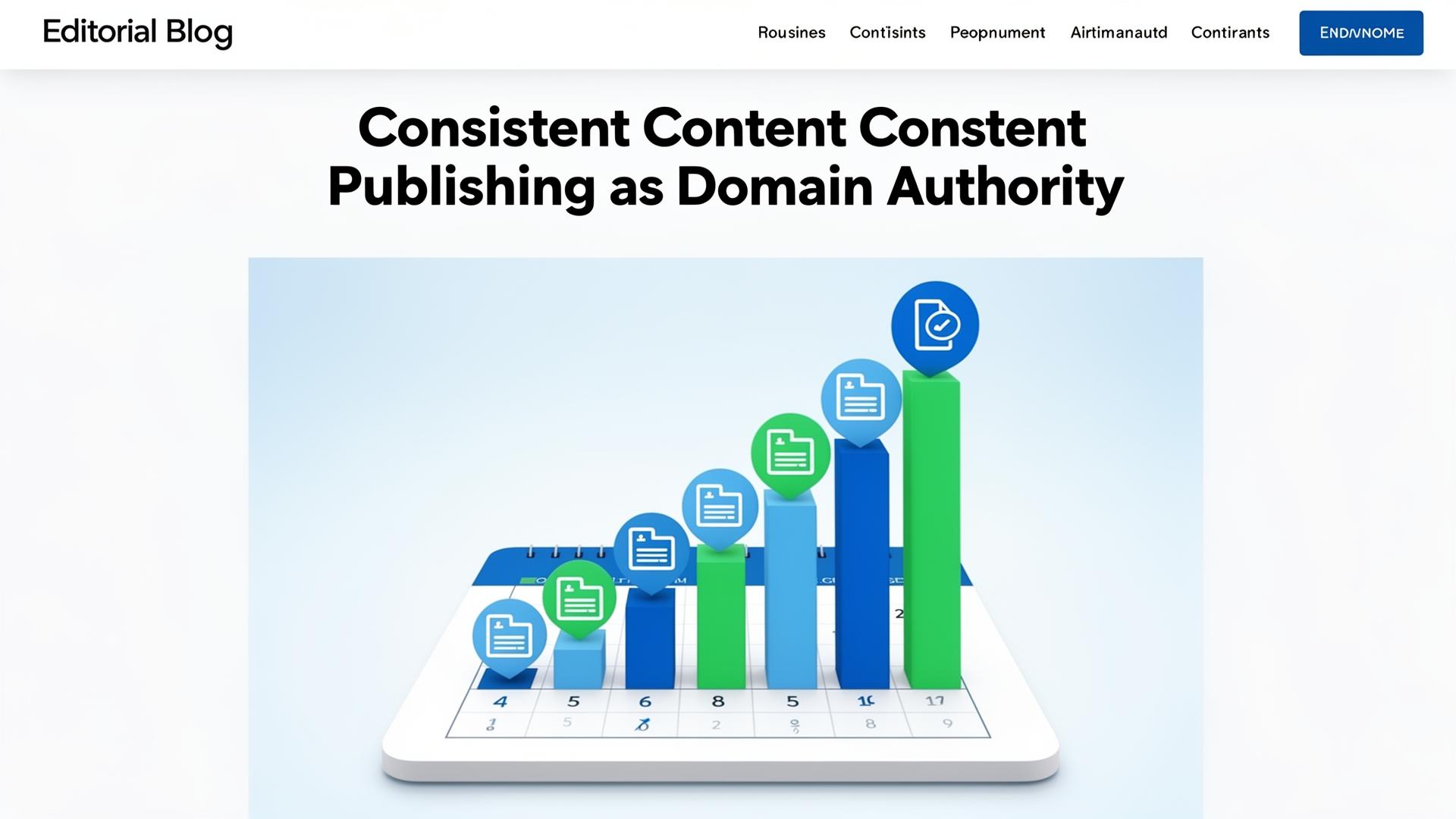
- Domain authority is a compounding metric — each quality article strengthens your entire site's ranking potential
- Consistency beats intensity — 4 good articles per month outperforms 20 articles in one month followed by silence
- AI removes the production bottleneck — what takes 4-8 hours manually can be done in minutes
- Internal linking between articles creates a content ecosystem that search engines reward
What Is Domain Authority and Why Does It Matter?
Domain authority (DA) is a metric that predicts how likely a website is to rank in search engine results. While Google doesn't use DA directly, the concept captures something real: sites that consistently demonstrate expertise, publish quality content, and earn trust from other sites perform better in search.
Think of it like a professional reputation. One great presentation doesn't make you an industry expert. But consistently sharing valuable insights over months and years builds a reputation that opens doors.
How Domain Authority Is Built
| Factor | Influence | How Content Helps |
|---|---|---|
| Quality backlinks | High | Great content attracts natural links |
| Content depth | High | Comprehensive articles signal expertise |
| Publishing consistency | Medium-High | Regular updates signal an active, authoritative site |
| Site age | Medium | Older sites with consistent activity rank higher |
| Technical SEO | Medium | Proper structure helps search engines index content |
| User engagement | Medium | Useful content keeps visitors on your site longer |
The Compounding Effect of Consistent Publishing
Content marketing isn't linear — it's exponential. Here's why:
Month 1-3: Foundation
Your first articles establish topical signals. Google begins to understand what your site is about. Traffic is modest, but each article adds a new entry point to your site from search.
Month 4-6: Momentum
With 10-20 articles published, internal linking opportunities multiply. Your site starts ranking for long-tail keywords. Some articles begin appearing on page 2 of Google.
Month 7-12: Compounding
Earlier articles have had time to accumulate backlinks and engagement signals. Your domain authority has grown, which lifts the ranking potential of every new article you publish. Articles that were on page 2 move to page 1.
Beyond 12 Months: Authority
With 50+ quality articles, your site is a genuine content hub. New articles rank faster because Google trusts your domain. Each piece of content benefits from the authority built by everything that came before.
Why Most Businesses Fail at Consistent Publishing
The concept is simple. The execution is where businesses struggle:
1. Content Creation Is Expensive
A professionally written, SEO-optimised article typically costs around £57 from a freelancer or agency. Publishing four per month means £228 in content costs alone — before considering strategy, editing, and publishing time.
2. It's Time-Consuming
Even in-house, a single well-researched article takes 4-8 hours to produce. For small business owners already wearing multiple hats, finding that time consistently is nearly impossible.
3. Quality Is Hard to Maintain
Writing one great article is achievable. Writing four great articles every month, month after month, while maintaining quality and avoiding repetition? That's where most content strategies break down.
4. Results Take Time
The compounding effect means results are backloaded. Businesses that expect immediate returns from content marketing often abandon their strategy before the compounding kicks in.
How AI Solves the Consistency Problem
AI-powered content tools fundamentally change the economics of content creation:
Speed
What takes 4-8 hours manually takes minutes with ArticleAI. Input your business details, target keyword, and audience — receive a fully structured, SEO-optimised article ready for publication.
Cost
Instead of £57 per article, AI-generated content costs a fraction of that. This makes consistent publishing economically viable for businesses of any size.
Quality at Scale
ArticleAI maintains consistent quality across every article — proper heading hierarchy, keyword placement, schema markup, and formatting. There's no quality degradation from writer fatigue or rushed deadlines.
Built-In SEO
Every article includes:
- Strategic keyword placement in titles, headings, and body content
- Proper H1-H3 heading hierarchy
- Article, FAQ, and BreadcrumbList schema markup
- Meta descriptions optimised for click-through rate
- Internal linking suggestions based on your existing content
The Ideal Content Publishing Schedule
Research consistently shows that publishing frequency correlates with traffic growth, but there are diminishing returns:
| Publishing Frequency | Monthly Traffic Impact | Recommended For |
|---|---|---|
| 1 article/month | Baseline growth | Solopreneurs starting out |
| 2-4 articles/month | 3.5x baseline | Small-medium businesses |
| 8-12 articles/month | 5x baseline | Growing businesses with content focus |
| 16+ articles/month | 6x baseline (diminishing) | Media sites and content-driven businesses |
The sweet spot for most businesses is 2-4 articles per month. It's frequent enough to build momentum but manageable enough to maintain long-term.
Building a Content Ecosystem
Individual articles are valuable, but a connected content ecosystem is exponentially more powerful:
Topic Clusters
Organise your content around core topics. For example, a plumbing business might build clusters around:
- Emergency repairs (boiler breakdowns, burst pipes, blocked drains)
- Home improvement (bathroom renovations, kitchen plumbing, heating upgrades)
- Maintenance tips (annual boiler servicing, preventing frozen pipes, water efficiency)
Each cluster has a pillar page and supporting articles that link to each other, creating a web of topical authority.
Internal Linking Strategy
Every new article should link to 2-3 existing articles on related topics. This:
- Helps Google discover and index your content faster
- Distributes page authority across your site
- Keeps visitors engaged with related content
- Strengthens topical relevance signals
Content Refresh Cycle
Older articles need periodic updates to maintain their rankings:
- Every 3-6 months: Update statistics and examples
- Every 6-12 months: Refresh for new search trends and algorithm changes
- Annually: Major rewrites if the topic has evolved significantly
Measuring the Impact of Consistent Publishing
Track these metrics to validate your content strategy:
Leading Indicators (Weeks 1-4)
- Indexed pages — are new articles being crawled and indexed?
- Impressions — is your content appearing in search results?
- Keyword coverage — how many keywords does your site rank for?
Lagging Indicators (Months 2-6)
- Organic traffic — month-over-month growth in search-driven visitors
- Average position — are your rankings improving over time?
- Backlinks — are other sites linking to your content?
Business Metrics (Months 3-12)
- Lead generation — enquiries and conversions from organic traffic
- Cost per lead — how content marketing compares to paid advertising
- Revenue attribution — revenue traceable to content-driven visitors
Getting Started with Consistent Publishing
Ready to build domain authority through consistent content? Here's your action plan:
- Sign up for an ArticleAI account
- Identify 5-10 target keywords relevant to your business
- Generate your first batch of 2-4 articles
- Set a publishing schedule — same days each week or month
- Track performance monthly and adjust your keyword strategy based on results
The businesses that dominate search results aren't necessarily creating better content — they're creating it more consistently. With AI removing the production bottleneck, there's no reason not to start building your content authority today.
Frequently Asked Questions
How long does it take to see results from consistent publishing?Most businesses begin seeing measurable traffic increases within 3-6 months of consistent publishing. Significant results typically appear at the 6-12 month mark as the compounding effect takes hold.
Is it better to publish one great article or four good ones?Four good articles. Consistency and volume build topical authority faster than occasional perfection. Each additional article creates a new ranking opportunity and strengthens your site's overall SEO profile.
Should I publish all my articles at once or spread them out?Spread them out. Search engines reward consistent activity over time. Publishing weekly signals that your site is actively maintained and regularly updated, which Google favours in rankings.
Can AI-generated content really build domain authority?Absolutely. Domain authority is built through consistent, quality content that attracts links and engagement. AI tools like ArticleAI produce content that meets these criteria at a fraction of the time and cost of manual creation.